Keyboards Under $100
What a hundred dollars buys in a mechanical keyboard, board by board, with every figure taken from the maker's own page and the date it was checked.
A hundred dollars used to buy a plastic keyboard with soldered switches and hope. This year it buys magnetic switches that adjust their own actuation point, a gasket-mounted case, double-shot PBT keycaps and open firmware, and the cheapest board on this page is $29.99.
This page is not a ranking. Nothing here was tested, no board is recommended over another, and there are no scores. What it does instead is the thing the roundups do not: every board below is listed with the specifications its maker publishes and the date the price was read. Each board name links to its entry in our index, where the same figures sit beside a link to the maker’s own page. Where a maker does not publish a figure, the cell says so rather than being filled from a marketplace listing.
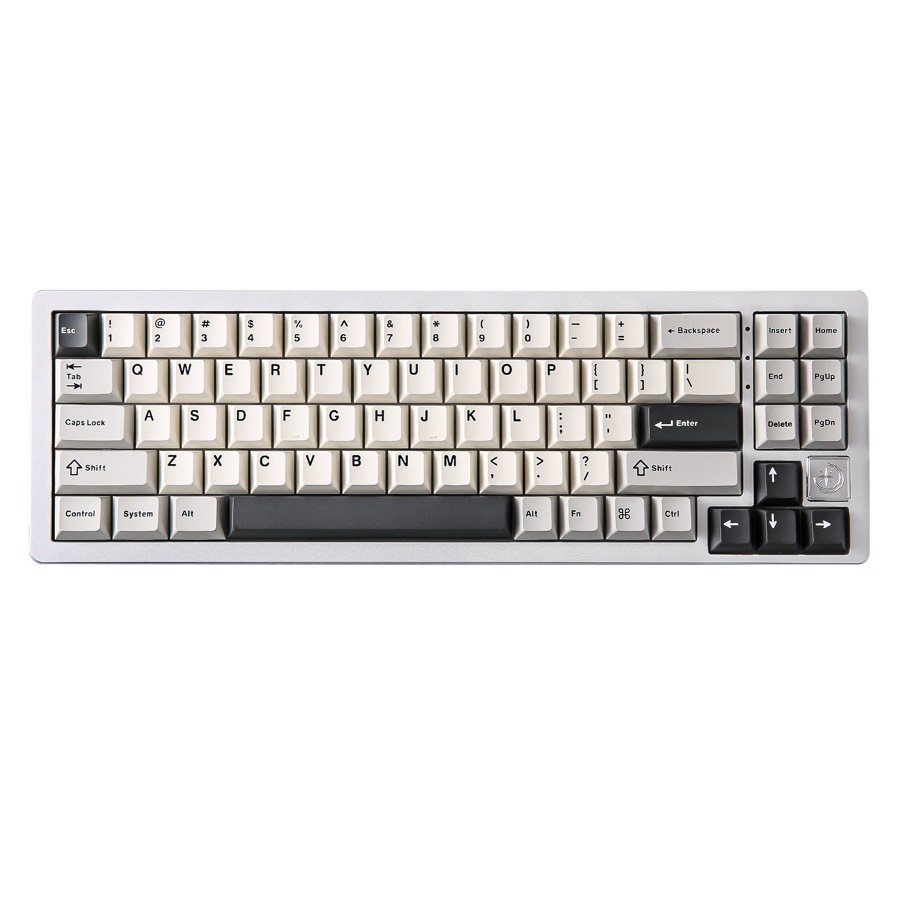 Photo: Yunzii, from its own product page. A CNC aluminium case at $55 is the year’s clearest shift in this bracket.
The short version
If you would rather not read the rest, this is the whole page in one table. Each line is the cheapest board here that fits the description, worked out from the same figures as the tables below, not a pick or a favourite. One board often fits several descriptions at once, and where it does they are listed together rather than repeating the board down the table.
| If you want the | Board | Price |
|---|---|---|
| Cheapest of all, without a cable, magnetic, with an aluminium plate and 60% | MonsGeek FUN60 Pro | $29.99 |
| Cheapest 65% | Epomaker HE68 Lite | $49.99 |
| Cheapest tenkeyless | Womier QK87 TKL | $49.99 |
| Cheapest on a gasket mount | Keychron C3 Pro 8K | $54.99 |
| Cheapest 75% | Ajazz AK820 Pro | $59.90 |
| Cheapest full-size | Keychron C2 Pro 8K | $64.99 |
| Cheapest Alice or split | Keychron V8 Max | $99.99 |
Prices are what the maker asked when the figure was last checked, before shipping and tax. Every board name opens its full specification, where the link to the shop lives.
What changed in the budget market
Four things, all of them readable off specification sheets rather than noticed in use.
Magnetic switches arrived at the bottom of the market. A Hall effect board with adjustable actuation and rapid trigger used to start around $150. MonsGeek sells one at $29.99, and there are six more under $90 across the makes on this page. The trade is that a magnetic switch is not a mechanical switch: the sensing is different, the switches are not interchangeable with MX-pattern ones, and the feel at the top of the press is different. Switch anatomy covers where the two diverge.
Open firmware is now a budget feature, not a premium one. QMK and VIA appear from $49.99 upward, including boards from Royal Kludge, Womier and keychron that a few years ago shipped with a Windows-only installer and nothing else. Where a maker has only its own driver, it is named in the table, because that difference matters more than switch choice.
Gasket mounting covers the mid band. From $54.99 up, most boards on this page claim a gasket mount, and what the gasket is made of is the interesting part: foam between plate and case behaves quite differently from a silicone strip holding the plate clear of both. Where the maker does not say which, the cell stays as published. Mounting styles explains what each one does to feel and sound.
Aluminium starts at $55. A CNC aluminium case is not a $200 feature any more. Yunzii sells one at $55 and MonsGeek at $94.99, both with the trade you would expect: 1.1 to 1.3 kg of board on the desk.
The boards, by layout
Every price below was read from the maker’s own store on 16 September 2026 and is the entry configuration that was in stock that day. Where a board sells in several switch or colour variants, the price shown is the cheapest one, and the note says so. Figures come from the maker’s own product page, linked on the board name. A sold-out or discontinued model is left out rather than listed at a price nobody can pay, and the exclusions are recorded in the research file behind this page.
60 percent
| Board | Price | Layout | Mount | Plate | Checked |
|---|---|---|---|---|---|
| MonsGeek FUN60 Pro | $29.99 | 60% | Tray-mounted | Aluminium plate | 2026-09-16 |
| MonsGeek FUN60 Ultra | $59.99 | 60% | Tray-mounted | Aluminium | 2026-09-16 |
| Womier SK61 HE | $89.99 | 60% | Gasket mount | 1.5 mm aluminium, non flex-cut | 2026-09-16 |
- MonsGeek FUN60 Pro, $29.99. Switches: Akko magnetic switches (Astrolink, AstroAim, Flash) and Glare Magnetic Switch. Keycaps: PBT double-shot. Firmware: MonsGeek Driver / web-based driver. Entry price $29.99 from a $29.99 to $39.99 range; a wired-only USB-C variant is also sold. 60% HE magnetic board, 8K polling wired and 2.4G, 3000mAh on the tri-mode version, demagnetised…
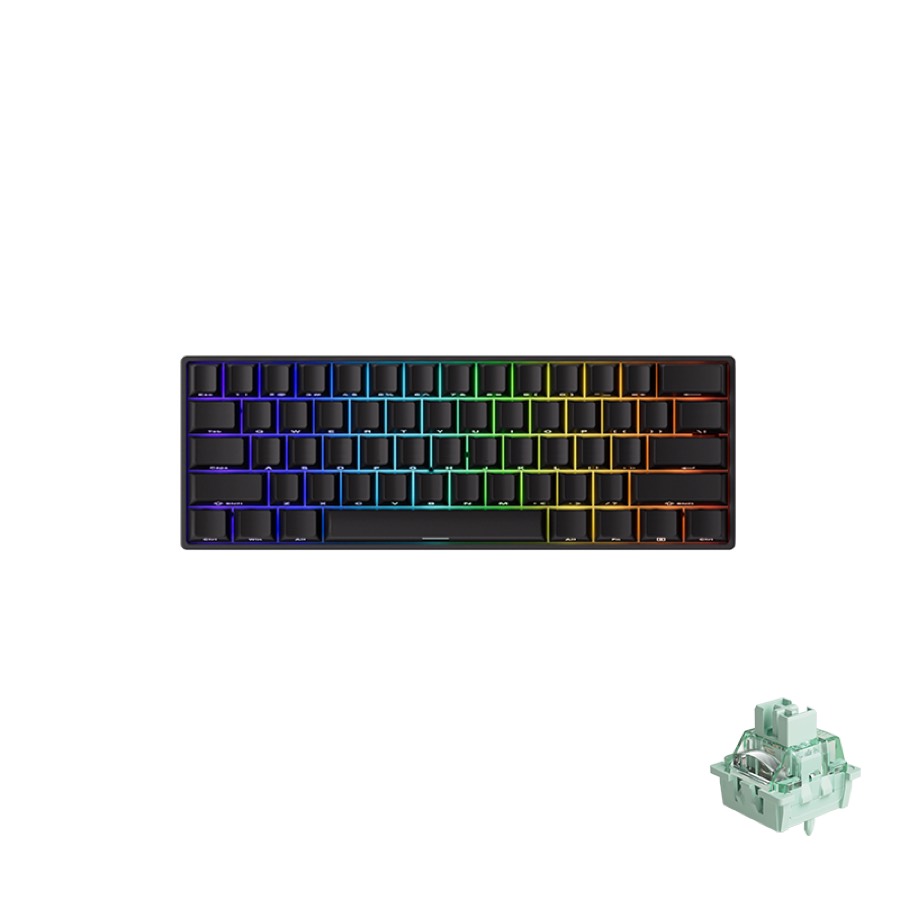 Photo: MonsGeek, from its own product page.
 - MonsGeek FUN60 Ultra, $59.99. Switches: Magnetic switches; TMR sensor version supports MagMech, HE sensor version does not. Keycaps: PBT shine-through. Firmware: MonsGeek Driver and web-based driver. Entry price $59.99 from a $59.99 to $89.99 range. Tri-mode or wired-only. Aluminium case, 4000mAh on the tri-mode version, RT accuracy 0.01 to 2.00mm, actuation range 0.1 to 3.40mm, pre-lubed…
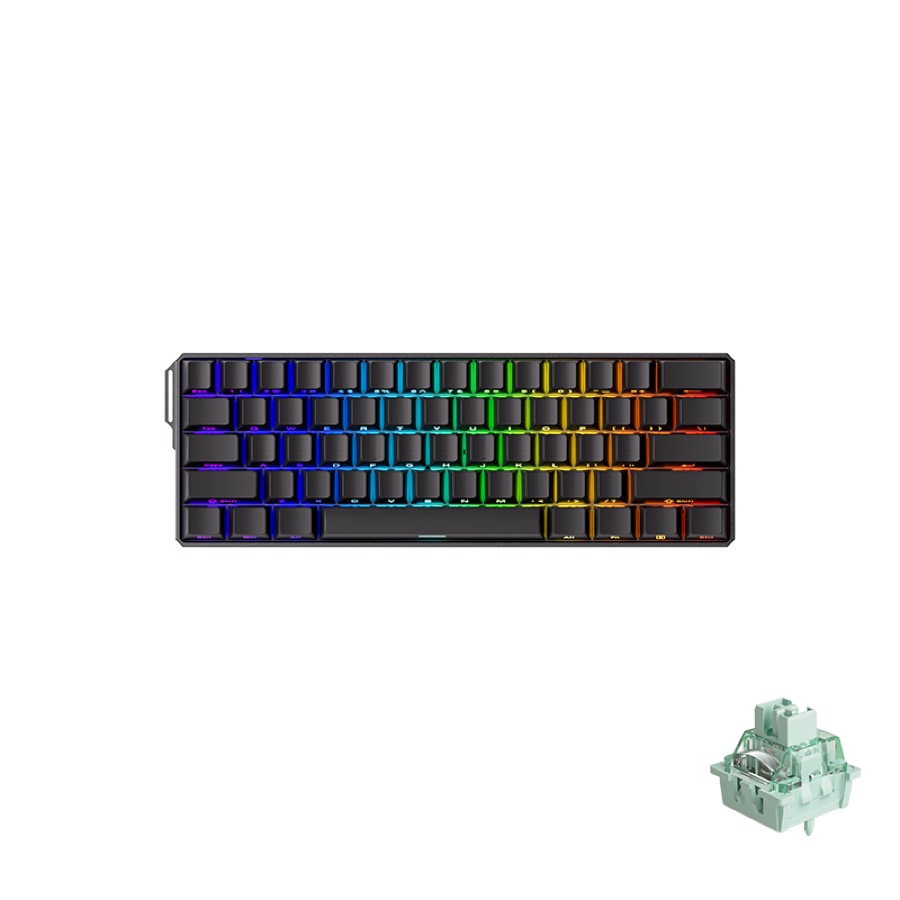 Photo: MonsGeek, from its own product page.
 - Womier SK61 HE 60% Hall Effect Wireless Gaming Keyboard, $89.99. Switches: Womier linear magnetic (Hall effect), 0.005 mm to 3.3 mm adjustable actuation, dynamic rapid trigger. Keycaps: Cherry profile ABS. Firmware: VIA plus a web-based driver. 61 keys, CNC aluminium hollowed-out frame with sandblasted finish, 5-layer foam, 1.6 mm FR4 PCB, 8000 Hz wired and 1000 Hz 2.4 GHz polling, Bluetooth 5.3, 6000 mAh, 304.8 x 117.6 x 32.0 mm. $89.99…
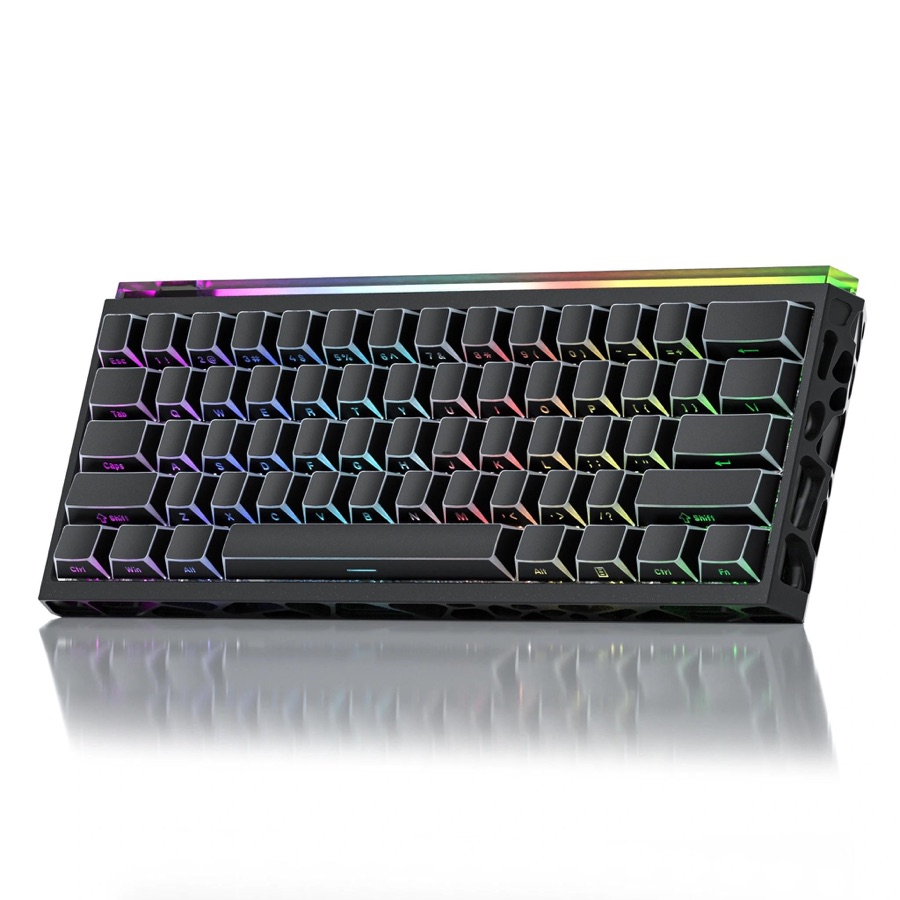 Photo: Womier, from its own product page.
65 percent
| Board | Price | Layout | Mount | Plate | Checked |
|---|---|---|---|---|---|
| Epomaker HE68 Lite | $49.99 | 65% | Tray-mount | PC plastic | 2026-09-16 |
| Royal Kludge R65 Wired | $59.99 | 65% | Gasket Mount | not published | 2026-09-16 |
| Womier VK66 Pro | $59.99 | 65% | Gasket | PC with flex cuts | 2026-09-16 |
| YUNZII AL68 | $64.99 | 65% | Gasket mounted | not published | 2026-09-16 |
| YUNZII AL71 | $55.00 | 65% | Leaf spring, gasket mounted | Slotted PC plate | 2026-09-16 |
- Epomaker HE68 Lite, $49.99. Switches: Epomaker Clear Mag Switch (Hall Effect, linear). Keycaps: PBT double-shot, Cherry profile. Firmware: Software for Windows and Mac (the page does not name it). 68-key wired HE board. No battery, 8000Hz polling, 128KHz scan rate, 0.125ms latency, 0.1 to 3.4mm adjustable travel, SOCD, DKS and mod-tap, zero dead zone. Hot-swap is not stated, so it is null…
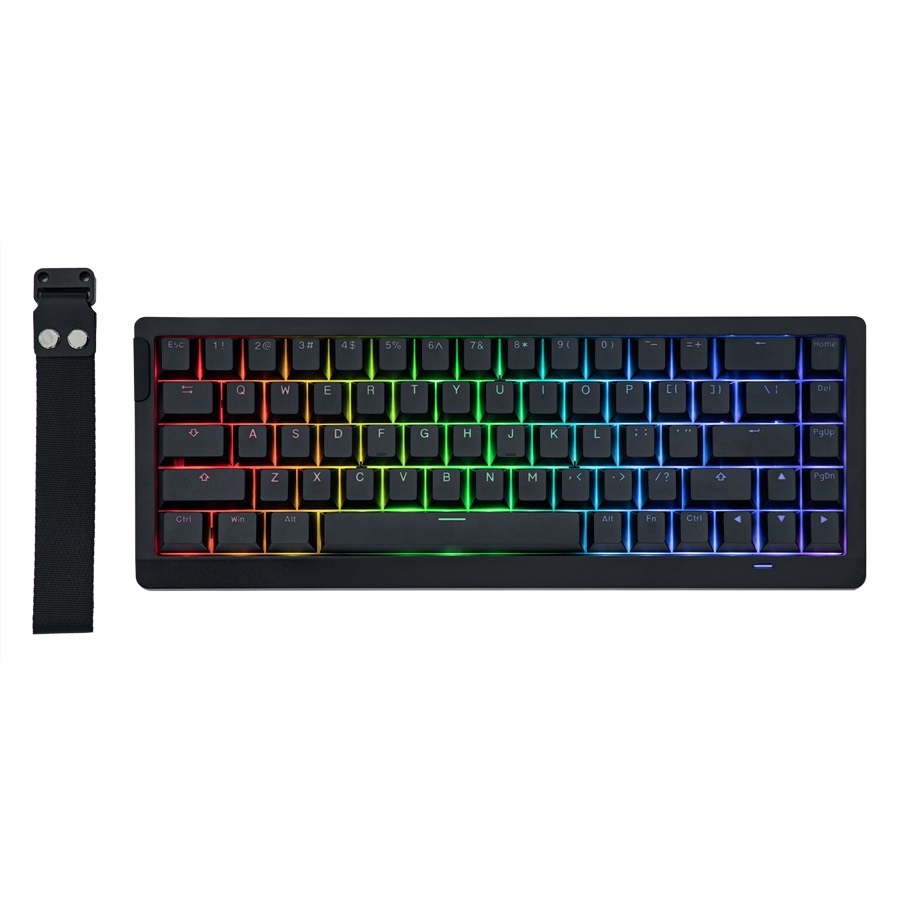 Photo: Epomaker, from its own product page.
 - Royal Kludge R65 65% Wired Gaming Keyboard (QMK/VIA), $59.99. Switches: Linear Cream Switch (RK). Keycaps: MDA profile PBT (spec table); the same page feature list may differ. Firmware: QMK/VIA (maker page lists VIA drivers). Maker page lists VIA drivers. No plate material published.
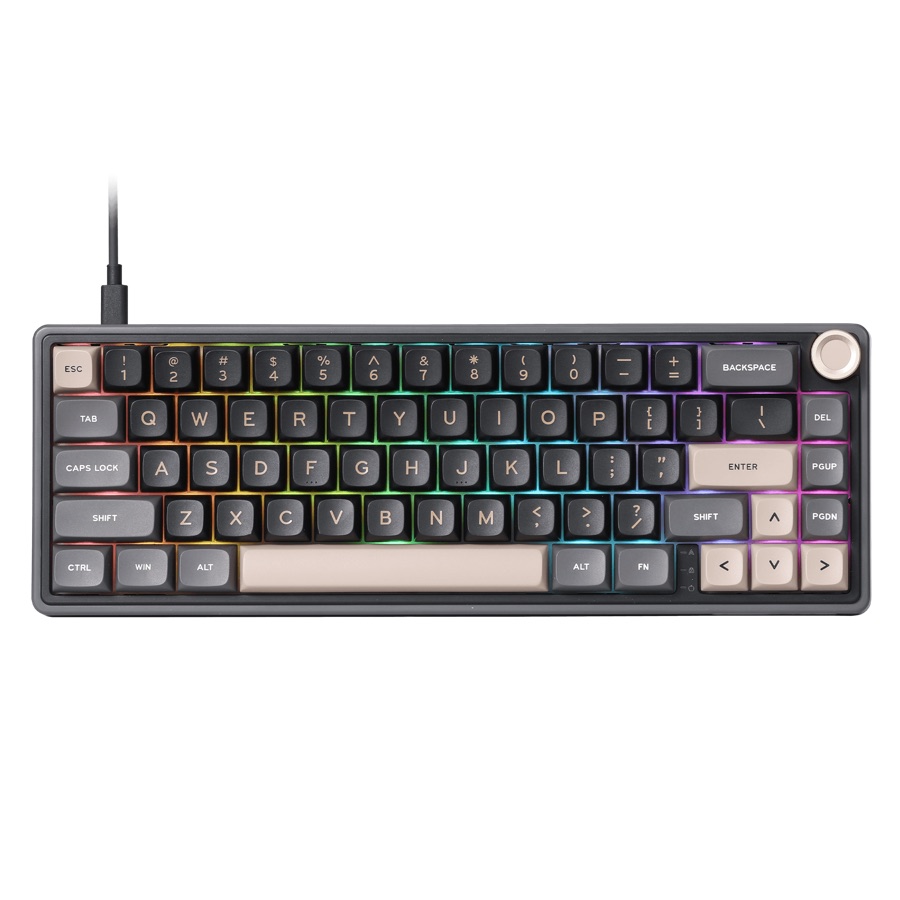 Photo: Royal Kludge, from its own product page.
 - Womier VK66 Pro VIA Support 66-Key Gasket Mechanical Keyboard with Knob, $59.99. Switches: Womier POM series switches. Keycaps: XDA profile PC (Pink Frosty Jello), Cherry profile PBT (Green and Ordinary). Firmware: VIA. 66 keys plus one metal knob, 322 x 113 x 42.5 mm, 1000 Hz wired polling, 1.2 mm hot-swap PCB that takes 3-pin and 5-pin, south-facing RGB. $59.99 in the US market on 2026-09-16, 25% off a $79.99…
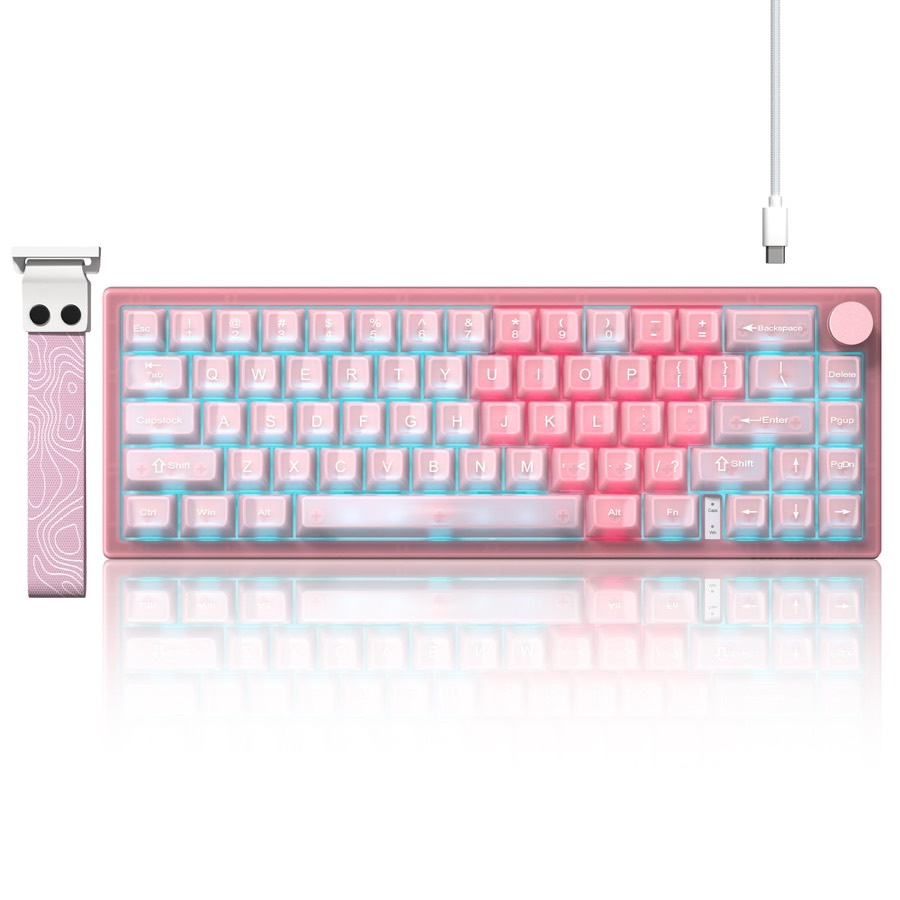 Photo: Womier, from its own product page.
 - YUNZII AL68 QMK/VIA Custom Mechanical Keyboard, $64.99. Switches: YUNZII Milk V2 Linear, YUNZII Cocoa Cream V2 Linear, Gateron Zero. Keycaps: Double-shot PBT Cherry profile. Firmware: QMK/VIA. 66 keys plus one knob, south-facing RGB, 6000 mAh, 319 x 114 x 40.25 mm. $64.99 on Yunzii’s own store on 2026-09-16 against a $124.99 regular price. Yunzii publishes no plate material for it.
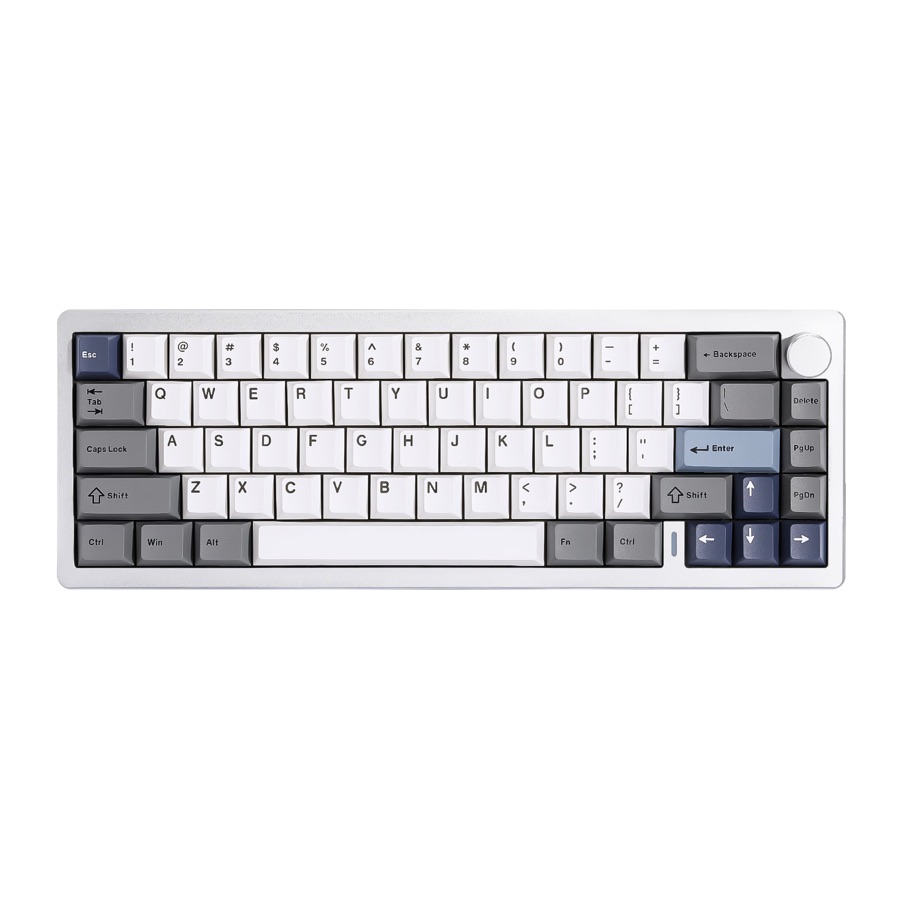 Photo: YUNZII, from its own product page.
 - YUNZII AL71 Full Aluminum Mechanical Keyboard, $55. Switches: YUNZII Crystal White Linear, YUNZII Peach Mute Linear (silent). Keycaps: Double-shot PBT Cherry profile (or double-shot PBT Cherry profile side-printed). Firmware: not published. 71 keys at 68% layout, 4600 mAh, hot-swap TTC sockets. Sale price $55 on Yunzii’s own store on 2026-09-16 against a $131.99 regular price. Yunzii publishes no firmware or QMK/VIA support for…
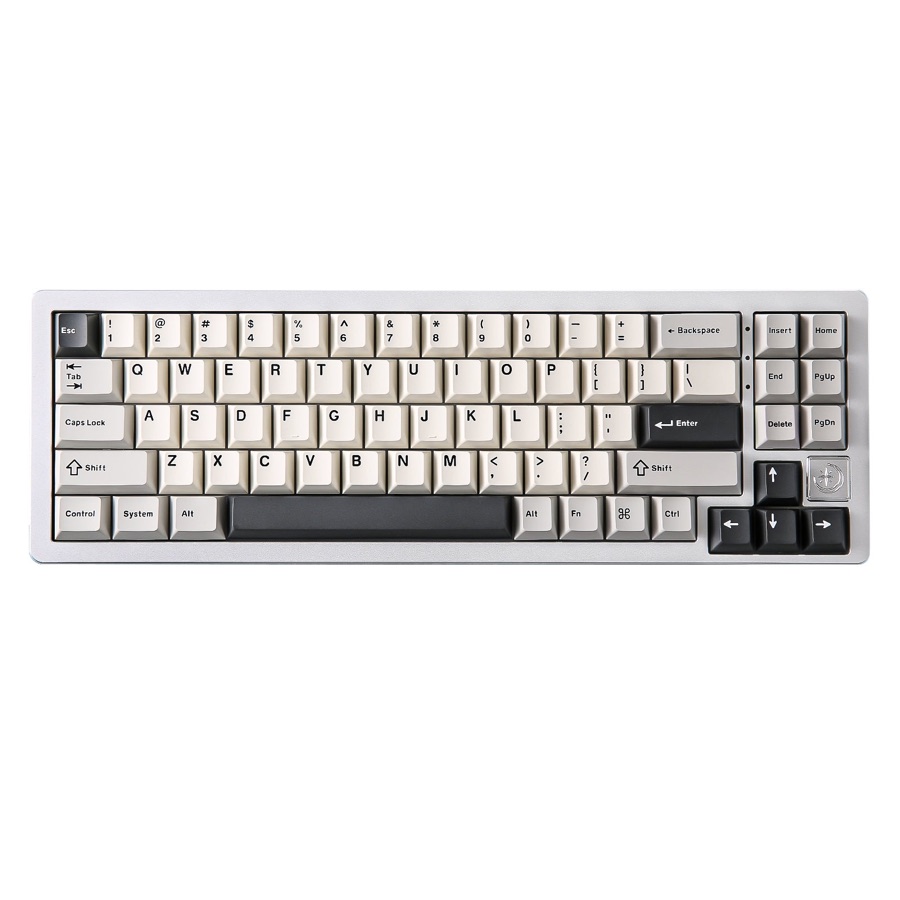 Photo: YUNZII, from its own product page.
75 percent
| Board | Price | Layout | Mount | Plate | Checked |
|---|---|---|---|---|---|
| Royal Kludge R75 Wired | $59.99 | 75% | Gasket Mount | not published | 2026-09-16 |
| Ajazz AK820 Pro | $59.90 | 75% | Gasket-mounted | Flex-cut PC plate and PCB | 2026-09-16 |
| Epomaker TH80 V2 | $68.99 | 75% | Gasket mount | PC (flex-cut) | 2026-09-16 |
| Keychron V1 8K | $74.99 | 75% | Tray Mount | PC | 2026-09-16 |
| MonsGeek M1 V5 Black and Silver | $94.99 | 75% | Gasket | PC | 2026-09-16 |
| Akko 5075 V5 | $99.99 | 75% | Gasket mount | Flex-cut PC plate | 2026-09-16 |
- Royal Kludge R75 75% Wired Gaming Keyboard (QMK/VIA), $59.99. Switches: Linear Cream Switch (RK). Keycaps: MDA profile PBT (maker spec table for this wired variant). Firmware: QMK/VIA (maker page lists VIA drivers). Keycap profile is MDA on this page against Cherry on the wireless page. No plate published.
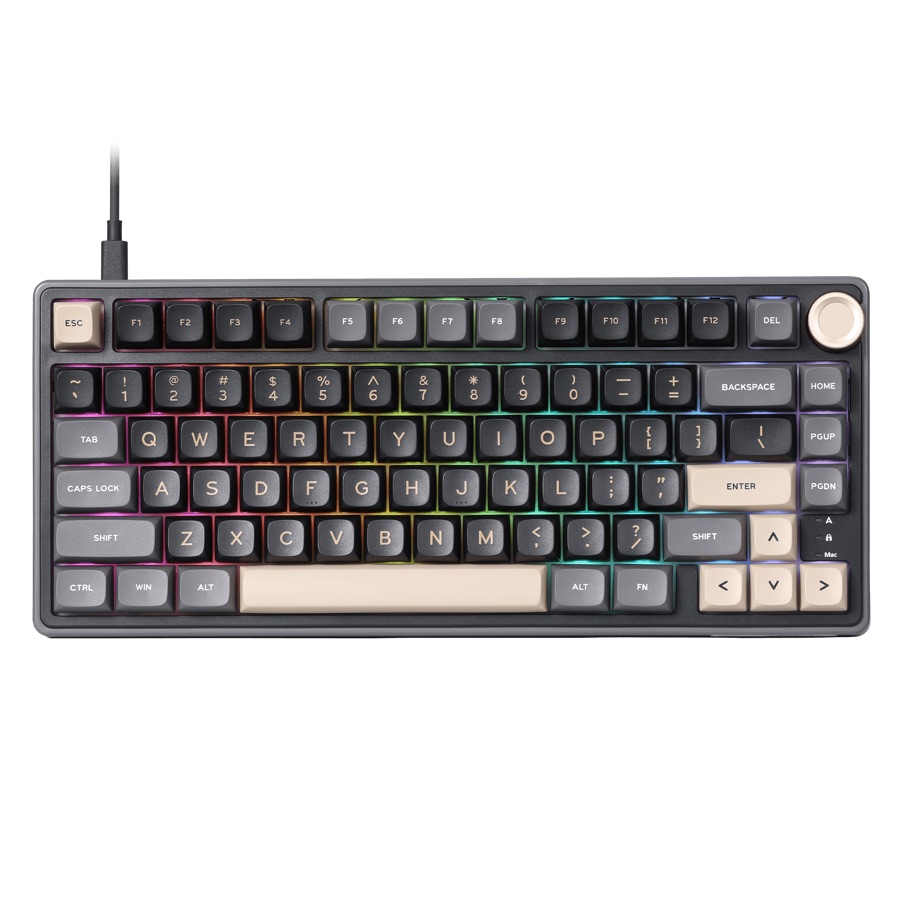 Photo: Royal Kludge, from its own product page.
 - Ajazz AK820 Pro, $59.90. Switches: Ajazz Flying Fish Switch, Ajazz Gift Switch. Keycaps: not published. Firmware: AJAZZ driver (download link published on the product page). 75% with TFT screen, control knob, south-facing 1.6M colour RGB, Mac/Win. Variant prices $59.90 to $62.99 on the maker’s store; ajazzstore.com lists it at $68.99 and Epomaker sells it at $68.99…
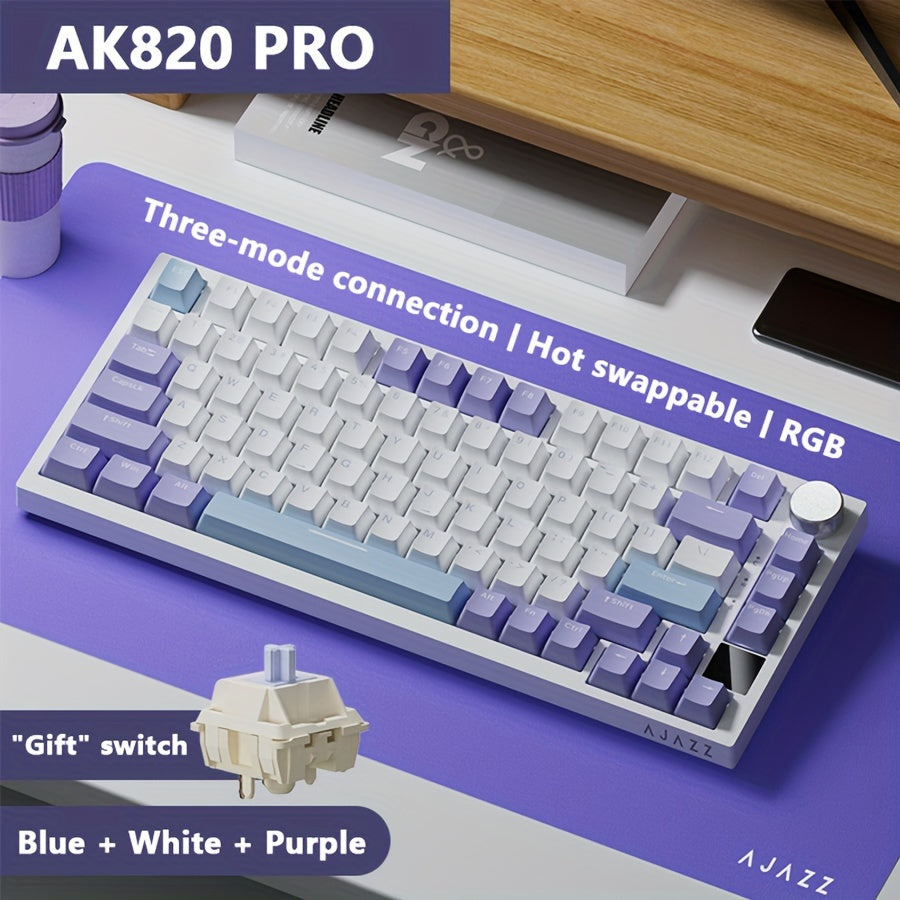 Photo: Ajazz, from its own product page.
 - Epomaker TH80 V2, $68.99. Switches: Epomaker Creamy Jade (linear), Epomaker Sea Salt Silent V2 (linear silent). Keycaps: PBT double-shot, Cherry profile. Firmware: Fully programmable EPOMAKER driver (Upgear); the page calls it the EPOMAKER Upgear software. 79 keys plus a knob, 8000mAh, 200 hours claimed with RGB off. Price from the maker’s own store feed ($68.99 to $69.99 depending on variant). Replaces the original TH80, which is no longer listed…
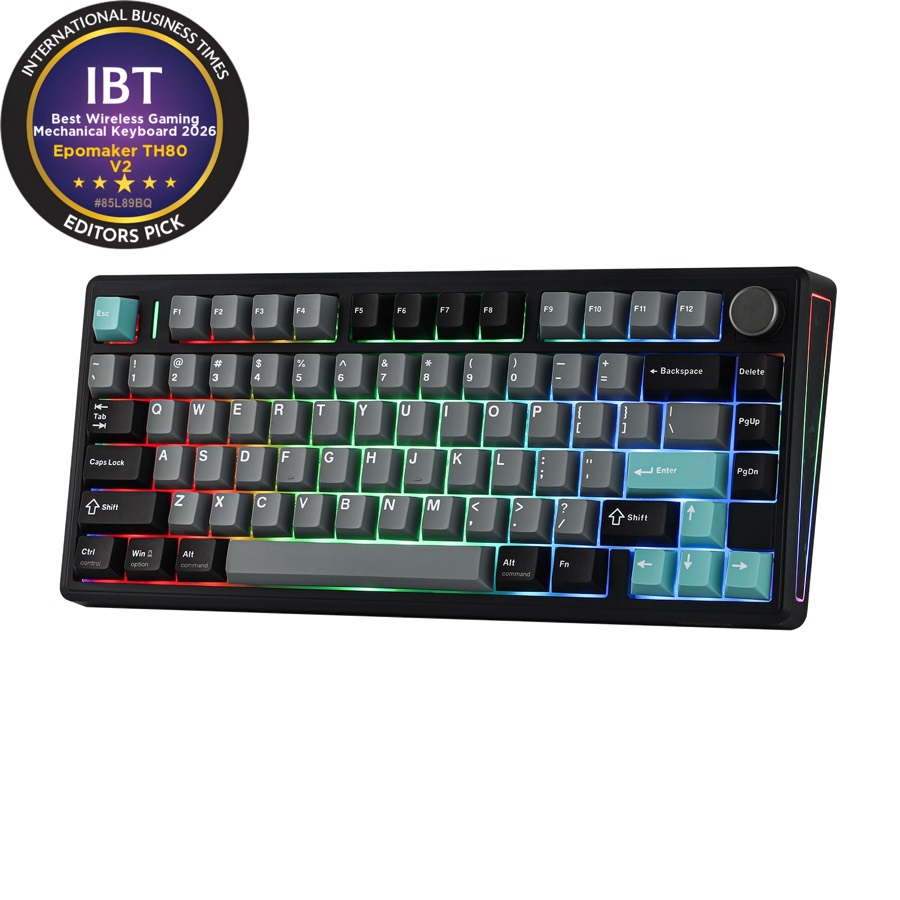 Photo: Epomaker, from its own product page.
 - Keychron Keychron V1 8K QMK Wired Custom Mechanical Keyboard, $74.99. Switches: Keychron Super (Red, Brown, Banana). Keycaps: OSA double-shot PBT. Firmware: QMK/VIA (Keychron Launcher web app). Wired, 8000 Hz. Only the Super Switch configs (Red, Brown, Banana) were in stock at $74.99.
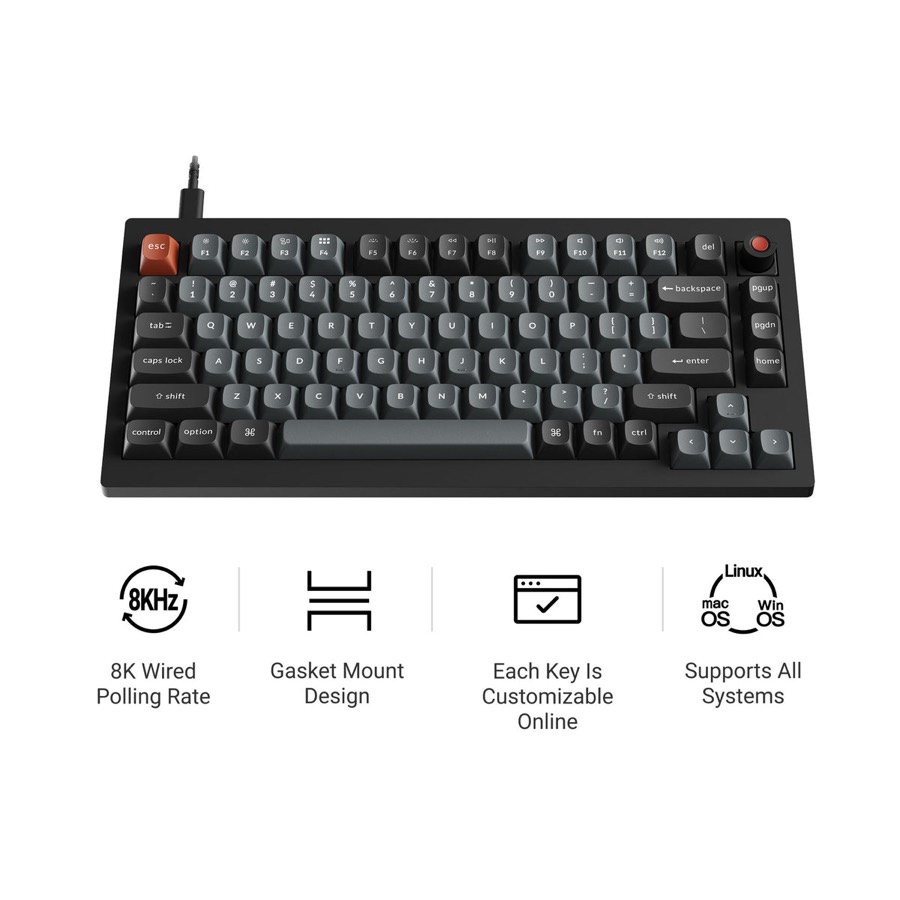 Photo: Keychron, from its own product page.
 - MonsGeek M1 V5 (Rapid Disassembly, Black & Silver, non-VIA), $94.99. Switches: Akko Cilantro (early tactile), Akko Mirror (linear). Keycaps: PBT double-shot, Cherry profile. Firmware: MonsGeek Driver (web). This non-VIA model explicitly does not support QMK/VIA.. 75% aluminium, quick-release ball-catch, tool-free case opening. Current price $94.99 (list $99.99). 5-pin hot-swap, gasket mount, PC plate, 1.2mm PCB, plate-mounted stabilisers, 8000mAh battery,…
 Photo: MonsGeek, from its own product page.
 - Akko 5075 V5, $99.99. Switches: Akko V3 Piano Pro (linear, 45 +/- 5gf). Keycaps: PBT dye-sub (Sanrio Cinnamoroll theme). Firmware: Akko Web Driver / Akko Cloud Driver (proprietary). Current 75% in Akko’s main line and the effective successor to the 5075B Plus. Listed at $99.99; sold in several Sanrio and collab themes, this price is the Cinnamoroll version. 8,000mAh battery,…
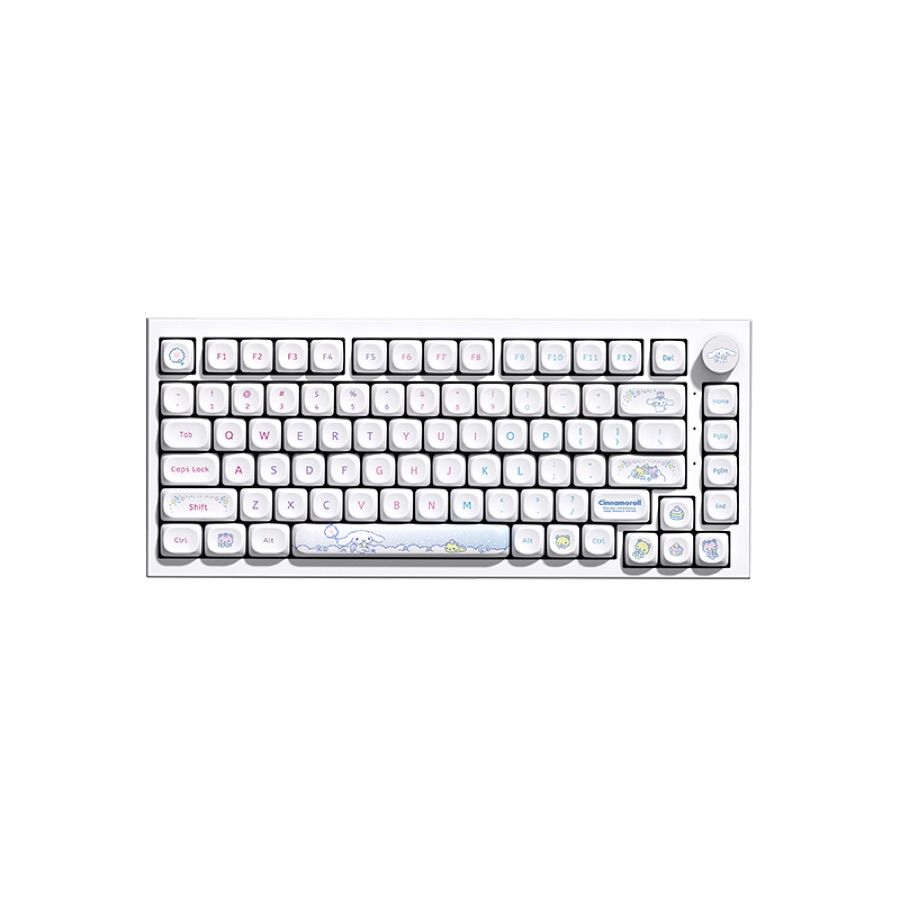 Photo: Akko, from its own product page.
TKL
| Board | Price | Layout | Mount | Plate | Checked |
|---|---|---|---|---|---|
| Womier QK87 TKL | $49.99 | TKL | not published | PC | 2026-09-16 |
| Keychron C1 Pro 8K | $54.99 | TKL | Tray Mount | not published | 2026-09-16 |
| Keychron C3 Pro 8K | $54.99 | TKL | Gasket Mount | not published | 2026-09-16 |
| Royal Kludge R87 Pro Wired | $64.99 | TKL | Gasket Mount | not published | 2026-09-16 |
| Keychron V3 8K | $74.99 | TKL | Tray Mount | Steel | 2026-09-16 |
- Womier QK87 TKL QMK/VIA Support Multimedia Display Wireless Keyboard, $49.99. Switches: Womier POM Beige switch. Keycaps: Cherry profile double-shot PBT. Firmware: QMK/VIA. 87 keys, ABS case, 4000 mAh, south-facing RGB, mini multimedia screen, 363 x 134 x 40.6 mm. $49.99 in the US market on 2026-09-16, 38% off a $79.99 list. Womier’s spec list gives no mounting…
 Photo: Womier, from its own product page.
 - Keychron Keychron C1 Pro 8K QMK Wired Custom Mechanical Keyboard, $54.99. Switches: Keychron Super, Keychron Apex. Keycaps: OSA profile double-shot PBT, not shine-through. Firmware: QMK/VIA (Keychron Launcher web app). Wired tenkeyless, 8000 Hz. No plate material published.
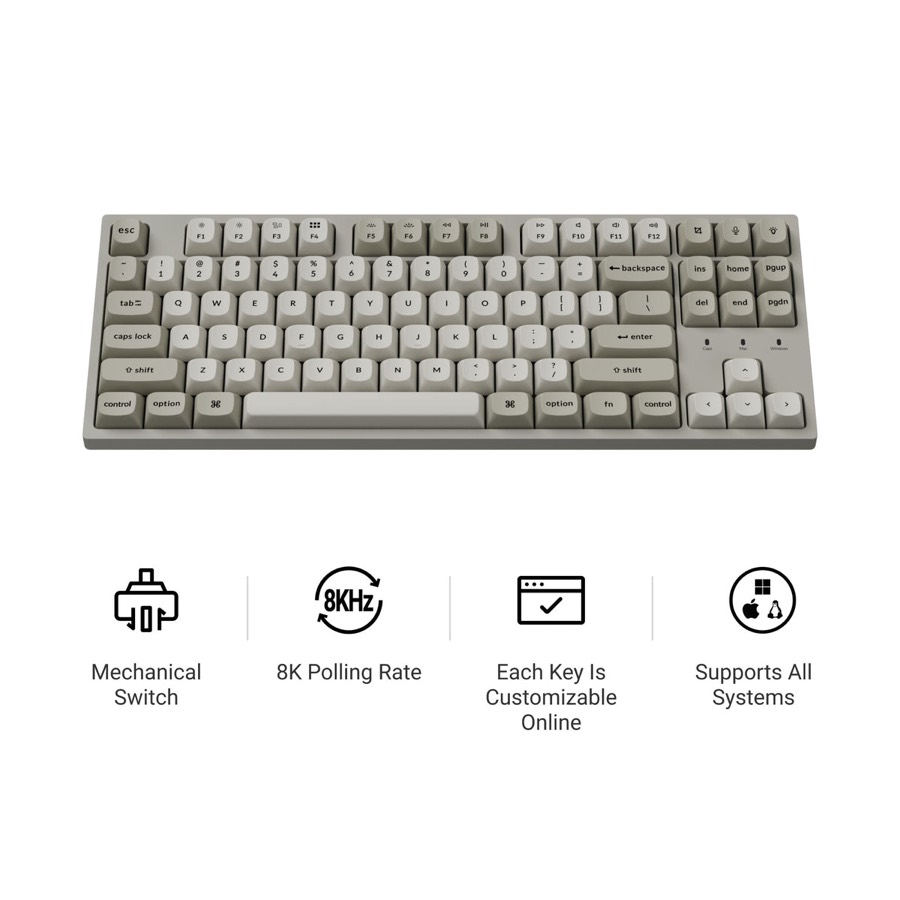 Photo: Keychron, from its own product page.
 - Keychron Keychron C3 Pro 8K QMK Wired Custom Mechanical Keyboard, $54.99. Switches: Keychron Super. Keycaps: Cherry profile double-shot PBT, shine-through. Firmware: QMK/VIA (Keychron Launcher web app). Wired tenkeyless gasket mount, 8000 Hz. No plate material published.
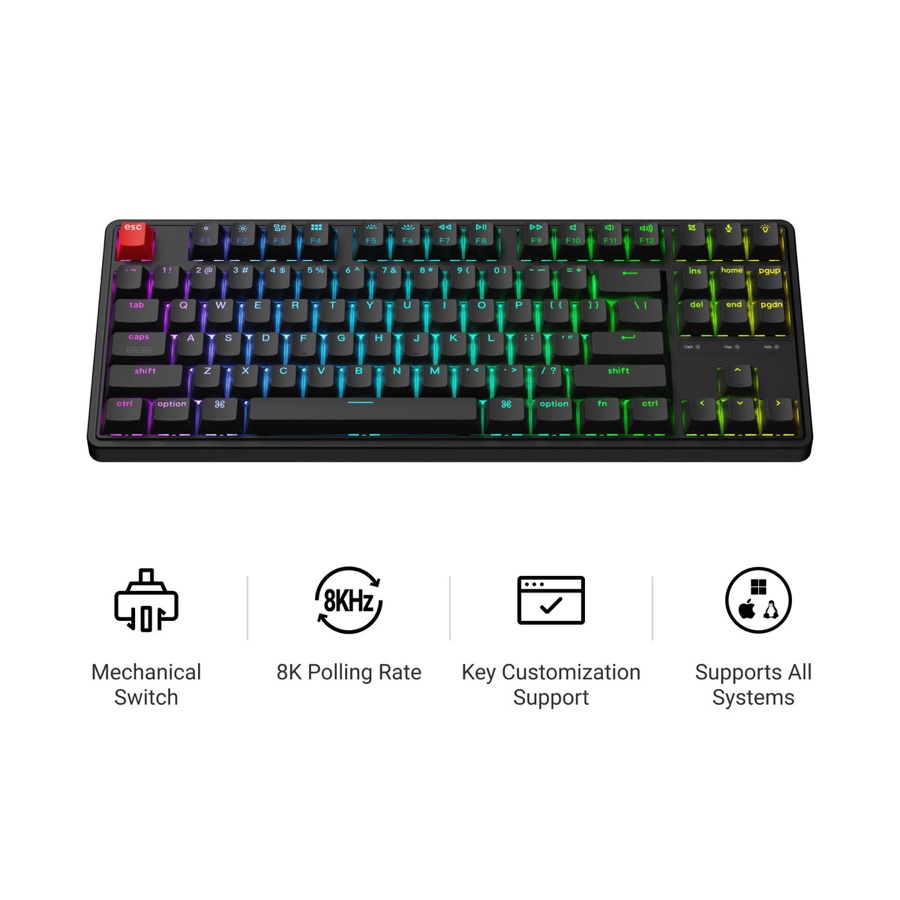 Photo: Keychron, from its own product page.
 - Royal Kludge R87 PRO TKL Wired Gaming Keyboard (QMK/VIA), $64.99. Switches: Creamy Switch (RK pre-lubed linear). Keycaps: Cherry profile PBT. Firmware: QMK/VIA. Single default configuration at $64.99. No plate material published.
 Photo: Royal Kludge, from its own product page.
 - Keychron Keychron V3 8K QMK Wired Custom Mechanical Keyboard, $74.99. Switches: Keychron Super (Red, Brown, Banana). Keycaps: OSA double-shot PBT. Firmware: QMK/VIA (Keychron Launcher web app). Wired tenkeyless, 8000 Hz. Plate material steel per the maker page.
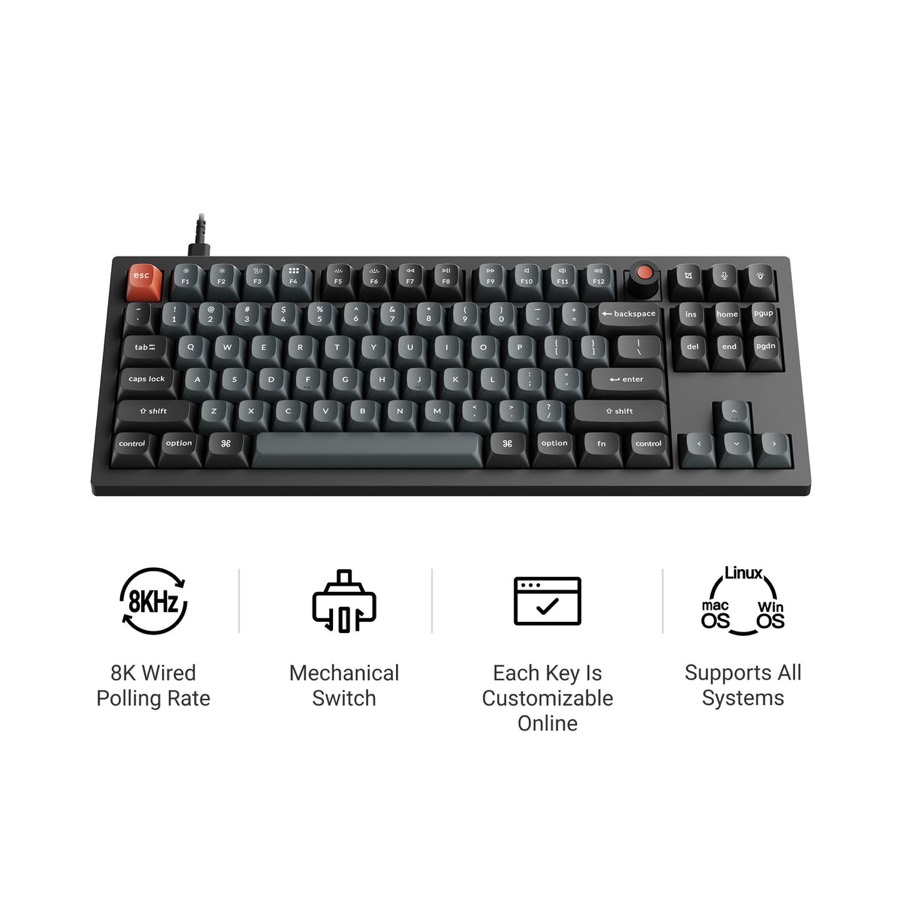 Photo: Keychron, from its own product page.
Full size
| Board | Price | Layout | Mount | Plate | Checked |
|---|---|---|---|---|---|
| Keychron C2 Pro 8K | $64.99 | Full size | Tray Mount | not published | 2026-09-16 |
| Keychron V6 8K | $84.99 | Full size | Tray Mount | Steel | 2026-09-16 |
| Akko 5108 V5 | $99.99 | Full size | Gasket mount | Flex-cut PC plate (dual-section split PC plate) | 2026-09-16 |
- Keychron Keychron C2 Pro 8K QMK Wired Custom Mechanical Keyboard, $64.99. Switches: Keychron Super, Keychron Apex. Keycaps: OSA profile double-shot PBT, not shine-through. Firmware: QMK/VIA (Keychron Launcher web app). Wired full size, 8000 Hz. No plate material published.
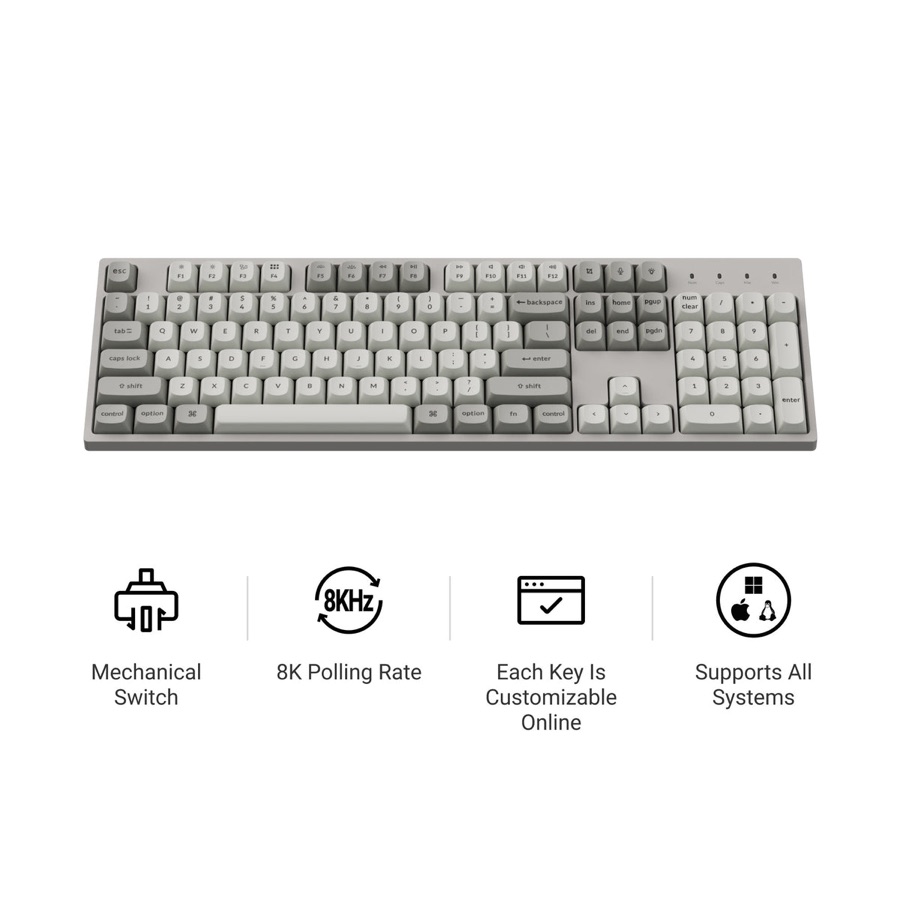 Photo: Keychron, from its own product page.
 - Keychron Keychron V6 8K QMK Wired Custom Mechanical Keyboard, $84.99. Switches: Keychron Super (Red, Brown, Banana). Keycaps: OSA double-shot PBT. Firmware: QMK/VIA (Keychron Launcher web app). Wired full size, 8000 Hz.
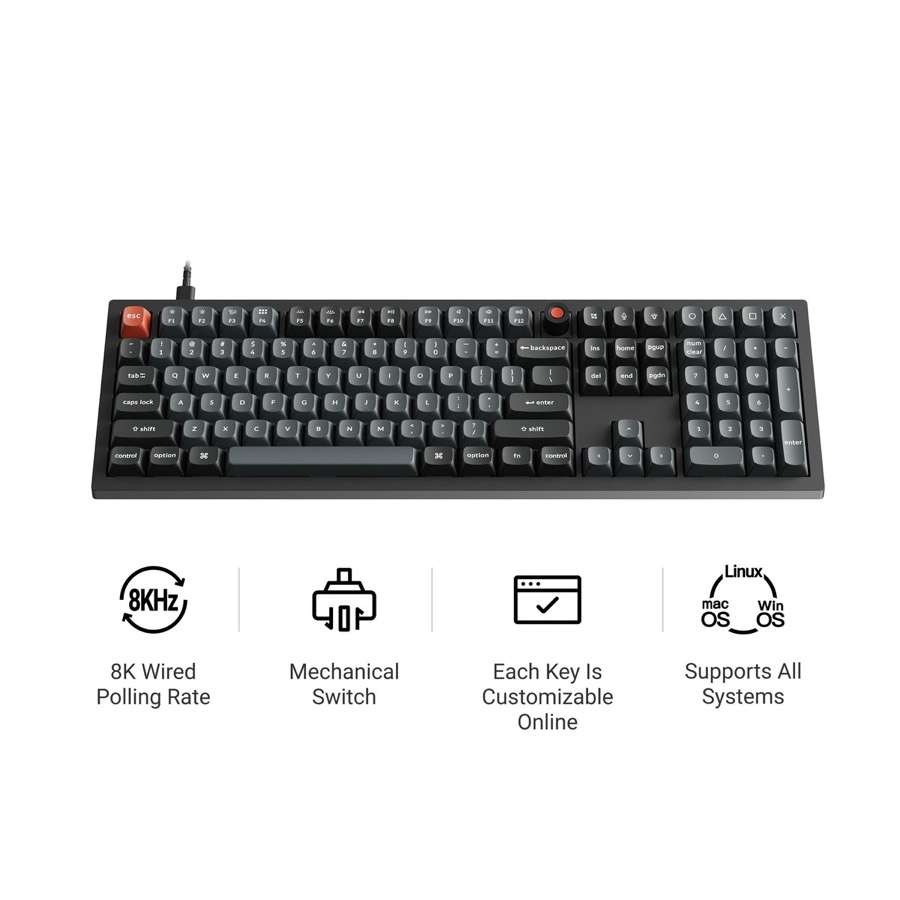 Photo: Keychron, from its own product page.
 - Akko 5108 V5, $99.99. Switches: Akko Creamy Yellow U1 (linear, 45 +/- 8gf). Keycaps: Jelly-style double-layer keycaps. Firmware: Akko Web Driver / Akko Cloud Driver. Full-size 100%, described by Akko as the official upgrade to the 5108B Plus. $99.99 for the Greedy Bear version; several other 5108 V5 themes are $109.99 to $119.99 and so sit above the $100 cut…
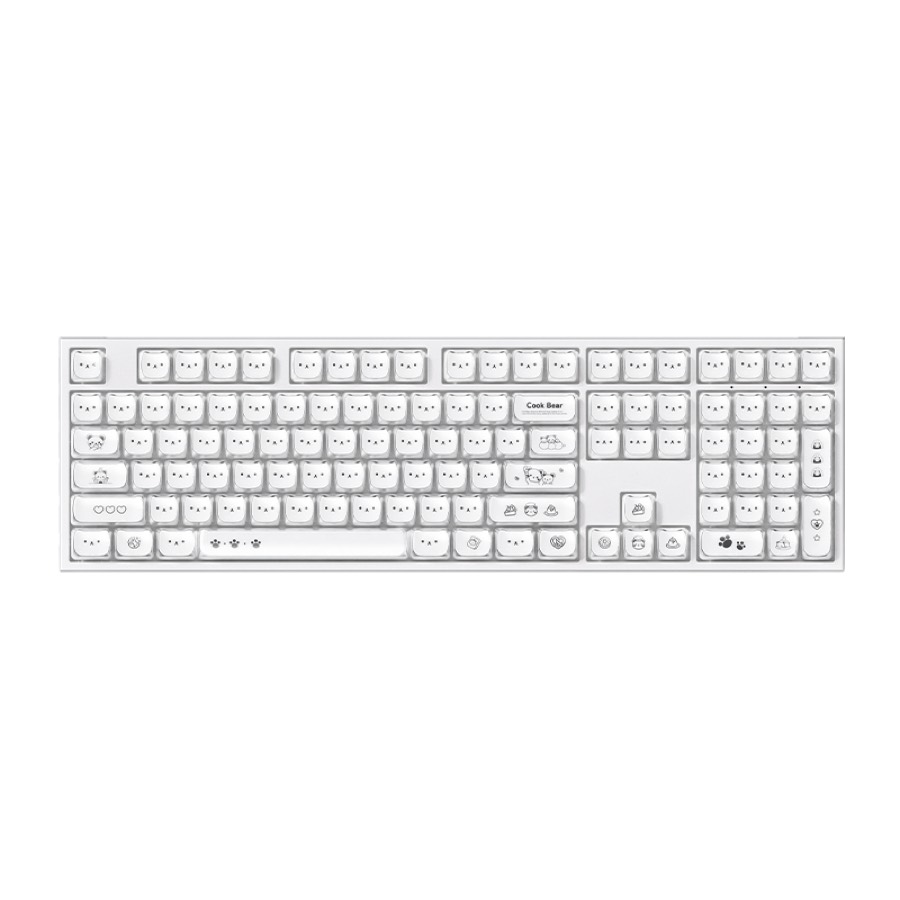 Photo: Akko, from its own product page.
Alice and 96 percent
| Board | Price | Layout | Mount | Plate | Checked |
|---|---|---|---|---|---|
| Keychron V8 Max | $99.99 | Alice or split | Gasket Mount | PC | 2026-09-16 |
| Keychron V7 | $59.99 | Other | Tray Mount | Steel | 2026-09-16 |
| Royal Kludge S98 | $89.99 | Other | Top-Mount Design | not published | 2026-09-16 |
- Keychron Keychron V8 Max (Alice Layout) QMK Custom Mechanical Keyboard, $99.99. Switches: Gateron Jupiter (Red, Brown, Banana). Keycaps: Double-shot PBT, not shine-through, OSA profile (OEM height, SA shape). Firmware: QMK/VIA (Keychron Launcher web app). Only the barebone knob version is in stock at $99.99; assembled versions exceed 100 USD.
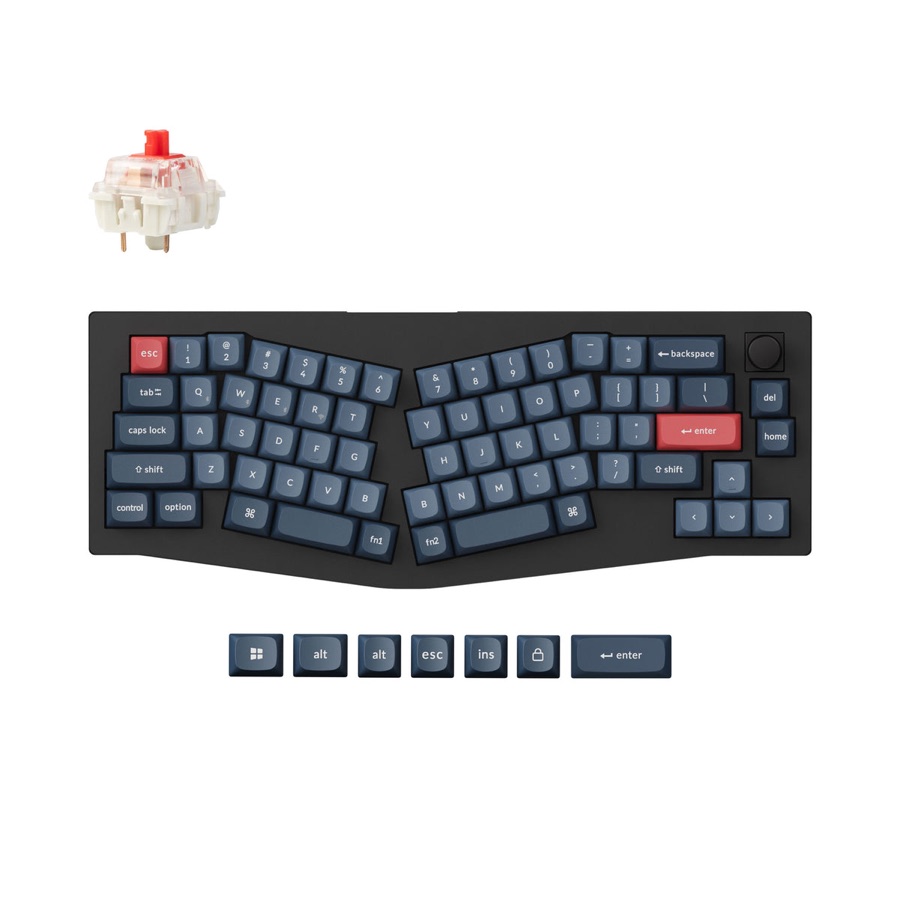 Photo: Keychron, from its own product page.
 - Keychron Keychron V7 QMK Custom Mechanical Keyboard, $59.99. Switches: Keychron K Pro (Red, Blue, Brown, Banana). Keycaps: Double-shot PBT, not shine-through, OSA profile (OEM height, SA shape). Firmware: QMK/VIA (Keychron Launcher web app). 70 percent (71 keys) has no standard size slug, recorded as other.
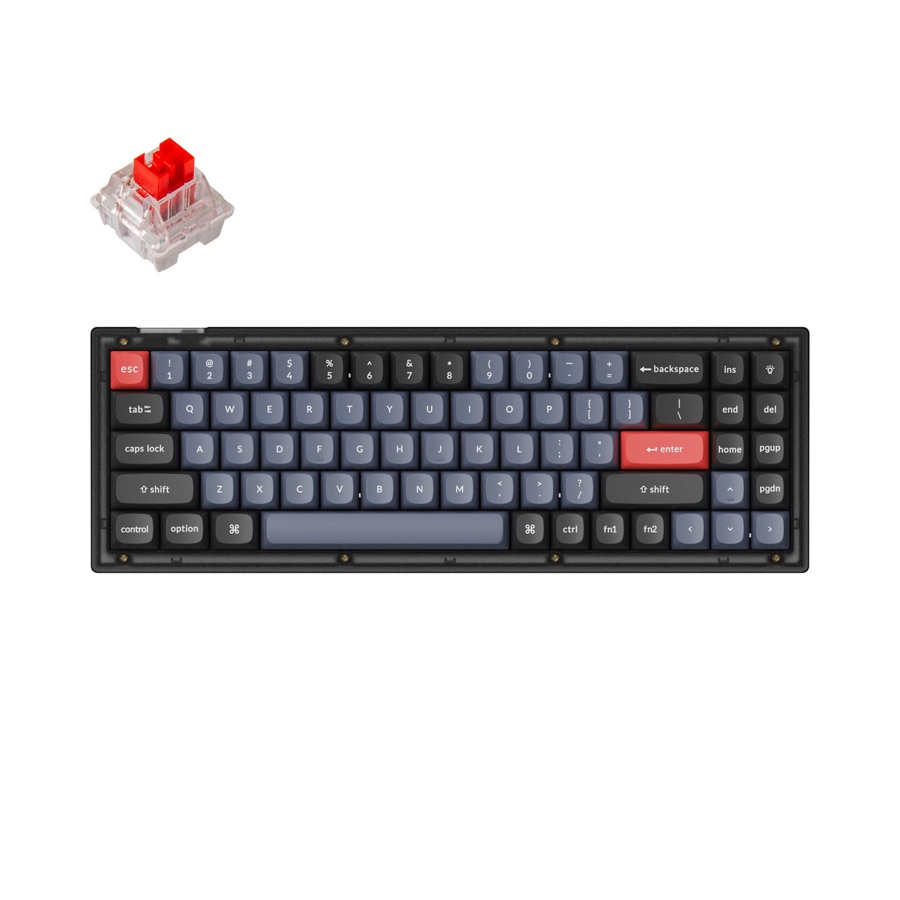 Photo: Keychron, from its own product page.
 - Royal Kludge S98 96% Wireless Mechanical Keyboard, $89.99. Switches: Tactile Beige Switch; Silent Purple Switch; Linear Cream Switch. Keycaps: PBT double-shot keycaps. Firmware: not published. 96 percent, recorded as other. Mount is Top-Mount Design per the maker page. In stock from $89.99 to $109.99. Maker names no firmware, so firmware is null.
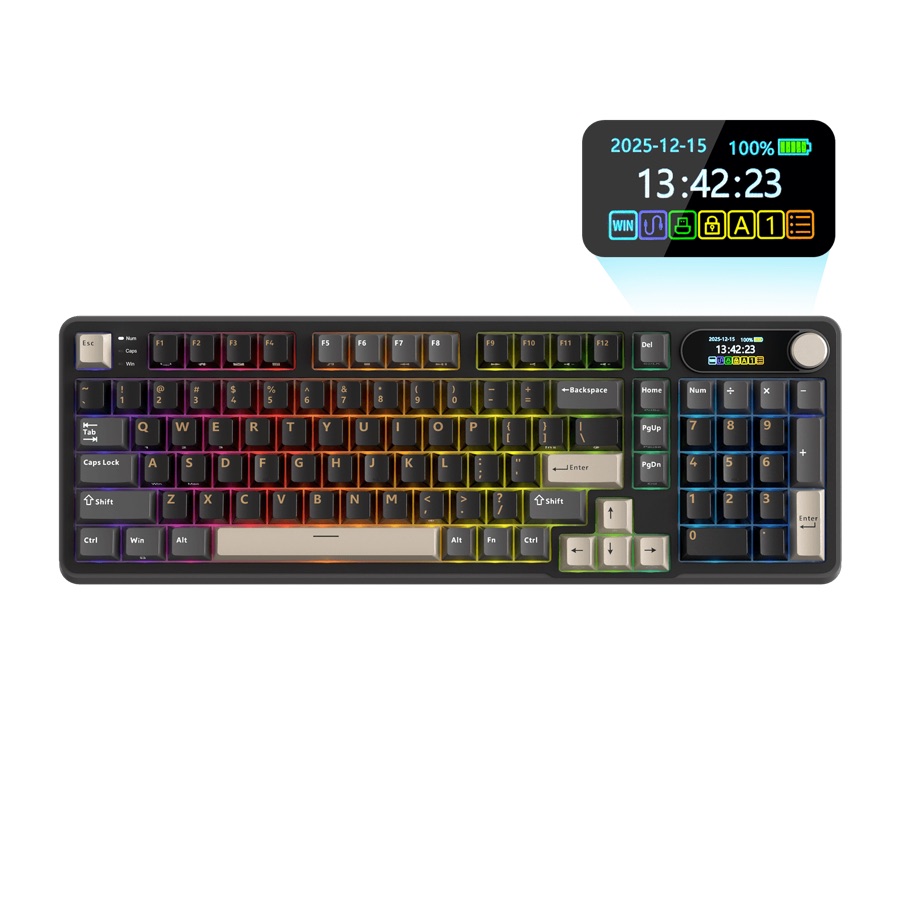 Photo: Royal Kludge, from its own product page.
What $100 still does not buy
None of the above changes the four things this bracket cannot supply, and it is worth reading them before the tables above.
- A case that does not ring. Aluminium is available, but the cheapest aluminium board here has a hollow frame rather than a solid block, and plastic is still plastic. The board is a box the sound happens inside.
- Stabilisers that do not rattle. Spacebar and shift are where budget boards give themselves away. Plate-mounted stabilisers dominate this price, and screw-in sets are usually the first worthwhile upgrade.
- Silence. Damping costs material and mass. A board described as quiet at this price is quiet relative to its own line.
- A switch line you can trust across batches. Budget switches are sold under the maker’s own name, and the figures that matter are the published ones: housing material decides pitch, travel decides how sharp the bottom is.
Six checks before you order
- Which switches the socket accepts, in the listing’s own words. Magnetic, Outemu-pattern and MX-pattern are three different answers.
- Whether hot-swap is stated at all. Several $60 boards do not state it, and absence is not the same as no.
- Plate material, which shapes sound more than the switch does. It is unpublished on a third of the boards on this page.
- Mount and gasket, in the maker’s words.
- Keycap material and profile, and whether the set fits your layout.
- The shop’s own returns window, before the price. Our shop directory records it from each shop’s own policy page, including the shops that do not accept returns at all.
How this page was made
Every specification and price comes from the maker’s own product page, read from its US storefront and dated in the table. Nothing on this page was tested, no board is rated, and no board is recommended over another. Where a maker publishes nothing for a field, the cell says “not published” and stays that way rather than being filled from a marketplace listing.
The tables are not written by hand. Each one names entries in our keyboard index and is built from them at publication, so a figure here cannot drift away from the entry it describes, and correcting an entry corrects every table that names it. A board cannot appear in a table at all until it has been indexed, which the build enforces rather than trusting anyone to remember.
The tables carry no hot-swap column, which is deliberate. Our index stores that as a plain yes or no, and a maker’s silence and a maker’s denial come out of it looking identical, so a column would state something about half these boards that nobody published. Check two above says the same thing from the buyer’s side: absence is not the same as no.
No link on this page is paid, and nothing here earns us a commission. Following a board name takes you to its entry, and the link out to the shop lives there, where any paid link is labelled as one.